
When a war breaks out, multiple actors, including practitioners, policymakers, UN agencies, NGOs and INGOs, often race to prevent its spread and support those impacted by the violence. But without proper coordination, their efforts can easily overlap or miss critical needs. Duplication of activities, gaps in service delivery and delayed responses are common challenges, not because actors lack commitment, but because they face multiple constraints, including limited resources, uncoordinated systems and shifting political dynamics among them. Still, one issue remains constant: the lack of timely and reliable information. These issues make interventions less effective and can prevent assistance from reaching the people who need it most.
Improving coordination is essential, yet in many contexts it is difficult to obtain the information needed to coordinate effectively. Limited access to data, remote locations and fragmented systems often make it difficult to gather information regularly. Even when data exists, it may be incomplete, outdated, interpreted inconsistently across actors, or simply not used when decisions are made. These gaps make it harder for actors to understand needs accurately and reach the people who require support most urgently.
From fragmented data to coordinated action
When information from multiple sources is brought together, the picture becomes clearer. Integrated data systems, dashboards and mapping tools can help actors to better understand what has happened, what the needs are and how best to respond. These tools can make it easier to identify gaps, reduce duplication and support more coordinated planning. They do not solve the underlying challenges on their own, but they provide a stronger foundation for timely and informed decision‑making in fast‑moving environments to support communities in urgent need.
This vision reflects the direction set by the UN Secretary‑General’s data strategy, which calls for improved data access, stronger interoperability and more timely data‑driven decision‑making across the system. The strategy recognizes that better information alone is not enough, but that when data is accessible, connected and responsibly used, it provides an integrated platform for coordinated and effective action in complex environments.
The promise and limits of technological change
To improve coordination, we need to do it fast, using high quality information, and with a holistic approach.
Technology plays an important role in enabling this shift. Digitization accelerates the flow of information. Data can now be collected from remote locations using mobile devices, coordination across multiple actors is supported through integrated data management platforms, and analysis that once required lengthy manual steps can be automated by different analytical tools. These advances make it possible to respond to the needs of conflict affected populations in more targeted and timely ways. Instead of navigating slow, fragmented and manual systems, actors can focus on understanding needs and directing support where it is most urgently required.
Early in my data career, when I first began working with a local NGO during the Rohingya refugee response in Cox’s Bazar, Bangladesh, technology had barely reached the remote camp areas scattered across the hills and mountains. We collected information over the phone or through paper‑based questionnaires: a slow, manual process that was far from ideal in an emergency response, where every minute matters.
When we transitioned to an ODK‑based data collection system, everything changed. Instead of chasing phone calls and sorting through stacks of paper, field teams could send data directly from their mobile devices. As the information came in, we could analyse and visualize it within minutes. That shift dramatically improved the speed and quality of our decision‑making, allowing teams on the ground to respond faster and with far greater confidence.
Rabby Shakur, UNIDIR Associate Researcher
But even with better systems and new technology, the way information is presented still needs to work for the people who use it. Many actors are already stretched thin, juggling several crises at once and expected to do more with fewer resources. If tools are complicated or take extra time to learn, they can become a burden rather than an asset for the actors. Formats need to be simple, practical and easy to use so that busy teams can quickly understand the information and act on it. When data is presented in a way that fits how people actually work, it is far more likely to support real decision-making.
This focus on usability also aligns with the broader direction of the UN80 initiative, which the UN Secretary-General has framed as essential to reducing duplication, strengthening coherence and enabling the UN system to operate more efficiently with limited resources. While still in process, the initiative reflects the direction set out in statements from the Secretary-General and in guidance circulated by Guy Ryder and senior leadership emphasizing clearer roles, shared approaches and more streamlined ways of working. By simplifying processes and reducing unnecessary complexity, UN80 seeks to ensure that actors can spend less time navigating systems and more time supporting people in need.
Beyond accessibility and usability, data must be reliable, ethically collected and managed and interpreted carefully. Poor-quality or misinterpreted data can reinforce blind spots rather than resolve them. Strong systems must therefore be accompanied by strong analytical capacity and governance frameworks that ensure ethical generation and use.
Ethical implications behind the numbers
Research findings that are usually disseminated via static outputs, such as reports and briefings, may sometimes limit the ability to respond to immediate questions. To realize the full value of the data collected, interactive and comparative data dashboards transform these findings into dynamic, user-friendly visualizations, on the one hand allowing deeper engagement, and on the other, maximizing the utility of this information for all. The latter is an underappreciated ethical imperative.
The focus on ethics in research is often at the design and implementation stage – ensuring respondents are fully informed, consent protocols are followed and personal information is protected. Yet, while each of these steps is essential, this is only one aspect of ethical research.
In considering ethics in this discussion, we especially address the moral responsibility that arises when research involves vulnerable people impacted by conflict. It is incumbent upon researchers to ensure that the data generated from their time and engagement is fully utilized and shared in recognition of the burden of their engagement and as part of efforts to ensure they are not overly interviewed. The UN, as an organization that promotes values like human rights, dignity and the protection of vulnerable populations, should be at the forefront of this type of ethical data use especially as UN actors seek to fulfill the Secretary-General’s data strategy vision.
Evidence that is collected from vulnerable, conflict-affected populations, but remains underused, inaccessible, or disconnected from policy and practice risks falling short of this ethical responsibility. In this sense, effective communication of research findings becomes part of ethical research practice, not merely a dissemination task.
Delivering results in a format that meets the need to inform real-time decisions is an ethical obligation to ensure that research is meaningfully used. Doing so via visual tools becomes increasingly critical, especially when addressing policymakers, practitioners and other stakeholders working across conflict transition contexts, often operating under time constraints.
Data is never just numbers. It is a human story – originated from someone who asked a question and shaped by the lived experience of someone who answered. Behind every number is a life, a story, a moment of trust.
Clara Zuccarino, UNIDIR Graduate Professional
At UNIDIR’s Managing Exits from Armed Conflict Project, we encounter these dynamics directly. The project conducts research to understand how and why individuals exit armed conflict, and how institutions can better support those transitions. Reintegration processes for individuals leaving armed groups are complex and deeply context specific. Generating rigorous evidence and assessments on conflict trajectories is essential to understanding what contributes to sustainable reintegration outcomes. However, research findings must be accessible if they are to inform real-world decisions.
By transforming UNIDIR’s evidence into accessible data portals and visualizations, we aim to make it easier for policymakers, practitioners and other stakeholders to translate evidence into action. The goal is not only to produce knowledge, but to ensure that it can inform planning, coordination and programmatic adjustments in meaningful ways and in semi-real time.
Maximizing the public value of evidence for future initiatives
Today, the UN system is asked to respond to complex global challenges amid tightening resources, resulting in both a practical and ethical responsibility to maximize the public value of data. Evidence generated through significant investment of time and trust by participants should not remain underused.
Evidence, however, is not an end in itself. Data has limitations, but strengthening how evidence is interpreted and applied across the system is both an efficiency measure and a commitment to ethical, impactful research and assessment. When information is translated into forms that genuinely support decision-making and shared responsibly in accessible formats such as dashboards or analytical tools, it becomes a foundation for more informed decisions in complex conflict response, ultimately improving outcomes for the populations the UN seeks to serve.
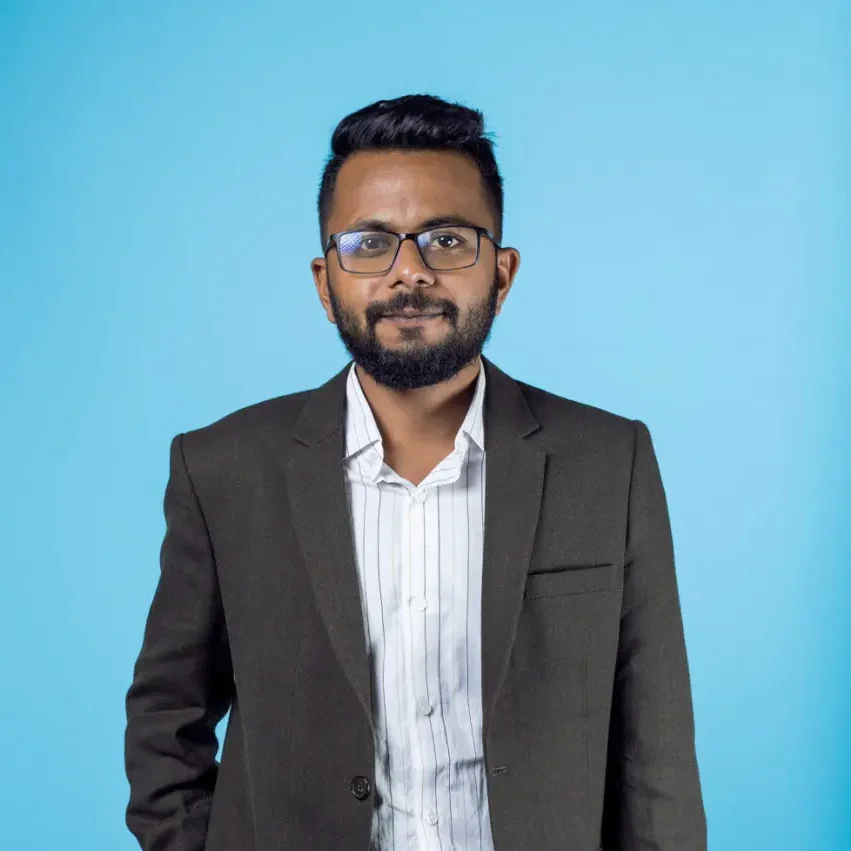
Mohammed Rabby Shakur is an Associate Researcher with UNIDIR’s Managing Exits from Armed Conflict project. Previously, he served as an Information Management Delegate with the Finnish Red Cross in Ethiopia, as a Senior Information Management Officer with the International Federation of Red Cross and Red Crescent Societies in Bangladesh, and as a Management Information System Officer with BRAC in Bangladesh. He has also worked as a consultant with the United Nations. Rabby holds a bachelor’s degree in management information systems from North South University.

Clara Zuccarino was a Graduate Professional with UNIDIR’s Strategic Communications Unit. She holds a master’s in international and development studies from the Geneva Graduate Institute and a bachelor’s in philosophy, international and economic studies from Ca’ Foscari University of Venice, where she graduated cum laude. Previously, Clara worked at the United Nations Economic Commission for Europe on media and social media relations and strategy with multiple international stakeholders.